
Bridging Science and Practice: UK Adaptation and Resilience Impact Seminar
Interdisciplinary collaboration is what makes translation possible: science frames the hazard, social and behavioural insight shapes messages people will act on, and finance and policy ensure pathways for implementation. That is where research turns into impact.
Anubhav Choudhary, Researcher in Climate Finance Analytics at the University of Leeds
The growing urgency of climate change means the UK needs to implement effective adaptation strategies. This requires innovative ideas and strong partnerships across sectors.
On 3 March 2026, the Priestley Centre hosted its inaugural impact seminar focusing on UK Adaptation and Resilience, one of the Centre’s core themes. Experts from research, industry and local government shared how their work is helping turn climate research into real-world action.
Making Climate Information Usable: Neha Mittal, Senior Climate Services Scientist at the Met Office
Neha’s work focuses on understanding how people use UK Climate Projections (UKCP18). Consultations and surveys with climate data users reveal their diverse needs and the variety of ways in which they apply data in practice. These data show that the projections are most commonly used for risk assessments by people who have intermediate data awareness. This user-led research is being used to make climate data more meaningful across sectors, improving the relevance and uptake of climate services.
“I was keen to take part in the Priestley Seminar because my work on UK climate services, particularly through UKCP18 user engagement, has shown how essential interdisciplinary collaboration is for translating climate science into impact. Bringing together climate science, social science, and user perspectives is key to ensuring information is relevant, usable, and supports real-world decision making.”- Neha Mittal

David Dawson, Associate Professor in Sustainability and Resilience at the University of Leeds
Urban Flood Risk Management in Practice: David Dawson, Associate Professor in Sustainability and Resilience at the University of Leeds
Working in collaboration with Leeds City Council and led jointly with partners including Jonathon Moxon, this project maps how flooding moves from the source to the point of impact. These insights support the development of flood management schemes and improve standards of practice. David highlighted a common challenge in bridging science and practice: real-world systems are more complex than research models assume. This makes it difficult to identify how individual studies influence policy. Despite this, a clear message emerged that strong relationships and sustained collaboration between researchers and practitioners are essential for achieving meaningful impact.
“Long-term collaborative partnerships are really important for developing real-world impactful outcomes based on the latest research.”- Jonathon Moxon (Leeds City Council)
Flood Risk for the Financial Sector: Mark Trigg, Professor of Water Risk at the University of Leeds
Mark’s research shows that different flood models can produce large differences in results, with only 30-40% agreement in flood extent modelled. This creates uncertainty in estimating flood risk, where average population exposure to flooding in the UK ranges from 0.5-3.5 million depending on flood model and population datasets used. To help address this, Mark worked with the Bank of England to develop a flood model that assesses how prepared the financial sector is for climate impacts. Hull was chosen as a test case for the model, due to its significant exposure and previous flood events. A key challenge discussed was that applying flood models to real-world situations often exposes their assumptions. While this can be challenging, it is a vital step that can be addressed in creating reliable outputs for decision-makers.
Engaging Homeowners and Lenders in Climate Risk Awareness: Anubhav Choudhary, Researcher in Climate Finance Analytics at the University of Leeds
Using surveys and co-designed workshops, this project explores how people understand climate risks to their homes. From this, Anubhav developed a visual communication toolkit for mortgage lenders to help inform homeowners about risks such as overheating and flooding (Figure 1). The toolkit aims to support informed decisions and practical action to reduce risk.
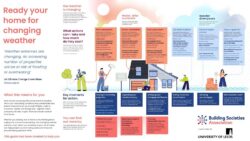
Figure 1: The visual communication toolkit used to inform homeowners about climate-related risks to their homes.
''I took part in the inaugural Impact Seminar because adaptation research only matters if it is understood and used beyond academia, and this was a valuable platform to share it with a wider, diverse audience and receive feedback.''- Anubhav Choudhary
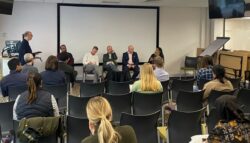
Panel of Anubhav Choudhary, David Dawson, Mark Trigg, Jonathon Moxon and Neha Mittal (left to right) answering questions from the audience.
Key takeaways
Across these diverse projects, a key message stood out: interdisciplinary collaboration is essential for developing climate adaptation strategies. When research is shaped by lived experience and practitioner insight, it becomes more useful, relevant and trusted. The University of Leeds will continue to build these partnerships to deliver clearer and more accessible impact assessments that support climate change adaptation across the UK.
Dr Debbie Rosen, Priestley Centre Research and Innovation Development Manager said:
Our first impact seminar enabled connections across disciplines and sectors, promoting a collaborative approach to building a climate-resilient future for the UK. We look forward to expanding these conversations with further activities and events in the months ahead.
Please see the slides from the presentations here.
If you’re interested in joining the UK Adaptation and Resilience research theme or would like to get involved in future impact-focused events or research showcases, please contact [email protected]
Authored by Ruth Williams, Priestley Climate Scholar