
Piers Forster reflects on 10 years of the Priestley Centre
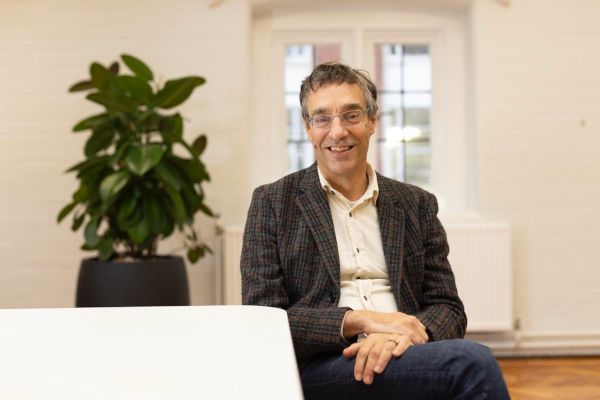
A decade of the Priestley Centre: Piers Forster’s reflections and hopes for the future
I wasn’t in Paris on 12 December 2015, but remember getting excited messages from colleagues in the room that an historic Agreement was about to be agreed that would limit global warming to 1.5°C. Rereading the article I wrote for Carbon Brief a few days later takes me right back to those optimistic, excited and heady days when I thought the world might win.
At Paris, over 190 nations came together promising to take transformative action. My article illustrated how limiting warming to 1.5°C could be achieved by rapidly switching from fossil fuels to renewable energy, electrification of our economies and through restoring natural ecosystems.
The article also noted that key climate science knowledge was missing. We didn’t know how impacts varied from 1.5°C of warming to 2°C of warming and we didn’t know how mitigation actions could work to hold warming below 1.5°C - the research of myself and colleagues had failed to keep pace with the international policy agenda. This agenda unusually wasn’t being led from the U.S. or Europe, but by the Marshall Islands who were campaigning for their very survival.
Determined to do better, we founded the Priestley International Centre for Climate a few months later. We wanted a closer working relationship with international colleagues and policy makers to ensure our research was addressing the right policy questions. We also needed to work more effectively across disciplines to make sure our research was actionable and useful. Hence, our interdisciplinary research and policy centre was born. Just like the Paris Agreement with its 5-year ratchet mechanism, we made a step change, transforming ourselves into the Priestley Centre for Climate Futures in 2024. Working more closely with businesses, with our own university and city to support their climate actions.
Reflecting on a decade of the Priestley Centre, I think we have been incredibly successful. We have built a strong community that has grown to more than 500 members and we have become a globally recognised brand. One of the things I am most proud of is how we have supported people. We founded the Priestley Climate Scholars programme in 2019 and have now guided seven cohorts of students, equipping them with the skills and networks needed to influence and shape climate action.
Our international policy work has grown substantially. We established a University of Leeds task force to strengthen our engagement with the United Nations Framework Convention on Climate Change (UNFCCC) process ahead of COP26, launched the Indicators for Global Climate Change (IGCC) in 2023, and have since delivered three annual global reports. We also hosted the first meeting of UK Lead Intergovernmental Panel on Climate Change (IPCC) authors with the Department for Energy Security and Net Zero (DESNZ). Together, these efforts have positioned Priestley as a trusted and influential voice within international climate governance. The same commitment to connecting evidence with decisions led us to establish the Climate Evidence Unit in 2024, ensuring our independent evidence reaches decision makers.
We have grown our convening power too. The Forum on Scenarios for Climate and Societal 2025, brought together 300 participants from more than 90 countries and our collaborative efforts to test practices for delivering a conference as sustainably as possible were recognised with an industry award. Alongside this, our research and innovation activity has expanded rapidly, contributing to major growth in Research and Innovation income (c.a. 80% growth in active climate-related research income since 2016) and building our innovation portfolio through EarthScale and other emerging programmes. Throughout all of this, our team and community have grown - in size, capability, ambition and impact.
The Priestley Centre has been successful, but has the Paris Agreement? The world is now in touching distance of 1.5°C warming. The US has pulled out of the Agreement. Countries and businesses have refocussed priorities away from climate action and multilateral cooperation. This makes it all too easy to see Paris as a failure. But the facts don’t lie. Globally, over $2.3 trillion dollars was invested in renewable energy in 2025. In the UK we closed our last coal fired power station and have halved our emissions since 1990. Spurred on by Paris Agreement and supported by a slew of expert evidence, much of it coming from Priestley Centre members, the UK and many other countries set binding Net Zero targets. Such targets are still compelling governments and businesses to act. The Paris Agreement has moved the dial, under current policies the world is heading for around 3°C of warming this century, not 4°C.
Although 3°C of warming would still be devasting, the world is now a more challenging place to push for climate action and we are finding ourselves having to win arguments and cases that I thought were already won. What keeps me going is the same thing that keeps the Priestley Centre going, the people I work with. Since John Plane and I rocked up to the office of our then Vice Chancellor, Sir Alan Langlands, to pitch the idea, we’ve had nothing but tremendous support from colleagues across the University and beyond. For many years we employed only one, or sometimes two, people but it always felt like I had an army at my back, so thank you to everyone who has made Priestley the success it is.
The future is very uncertain, but thanks to your efforts we know how climate damages will likely evolve and we know better than ever the actions that are needed to justly build climate resilient communities and cultures. We need to work harder than ever to tell a new narrative that addresses the political economy. Sustained by your energy, and to repeat what I said at the end of my 2015 article, I can’t wait to roll up my sleeves and work with you to build our capability and agility to drive climate action.
Join us as we mark 10 years of climate research and impact: subscribe to our newsletter and follow us on LinkedIn and BlueSky to hear about special events, features, and celebration highlights.