
Energy-efficient buildings cut bills, create jobs, and reduce emissions
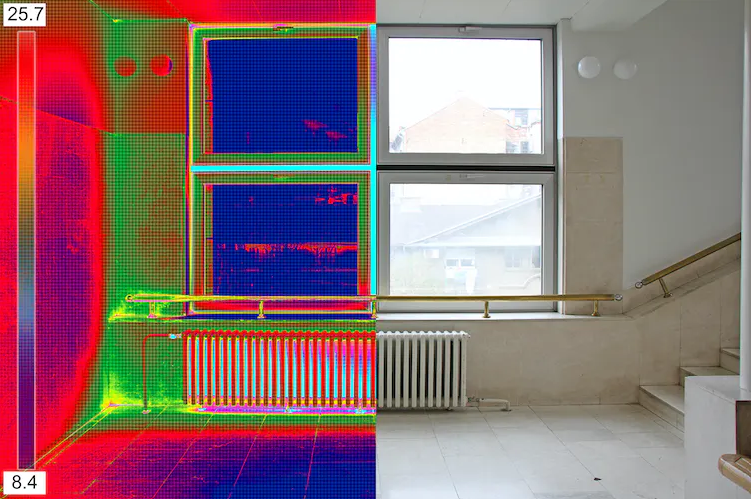
Making the UK’s homes more energy efficient is one of the best ways we can reduce emissions whilst improving wellbeing. We can make homes warmer, healthier and cheaper to run through a mix of insulation, heat pumps and retrofit. Yet UK buildings remain among the least energy efficient in Europe, and recent policy efforts have not delivered retrofit at the scale required.
Now, researchers on the PACT project led by the University of Leeds and at the La Universidad de Valladolid have shown what improving our building stock on a mass scale could look like in terms of energy use and the wider economy. Using the novel MARCO-UK model, which combines energy system analysis with macroeconomic modelling, they examine not only possible energy savings but also effects on factors such as GDP and employment.
The results are remarkable. As well as reducing fossil fuel consumption in the buildings sector by 35%, decarbonisation would deliver significant and widespread socio-economic benefits, generating £1.125 trillion in additional GDP by 2050.
Modelling UK-wide retrofit
Building on previous work on the EV transition this new study uses the MARCO-UK (MAcroeconometric Resource Consumption) model to examine the economic and energy impacts of buildings decarbonisation in the UK. It allowed researchers to simulate a series of scenarios running to 2050, focusing on homes and commercial/public buildings, and capture how improvements in energy efficiency, such as insulation or heat pumps, affect both energy demand and wider economic activity.
Unlike other models of future UK economic growth, MARCO-UK fully captures the productivity gains that come from a more energy-efficient economy. As the energy transition shifts end uses towards highly efficient electrification, MARCO-UK provides a more complete picture of the economic benefits of energy efficiency than has previously been possible.
Primary Energy (energy in its original form) → Final Energy (the energy that reaches the user) → Useful Energy (the energy service produced after conversion losses)
The scenarios developed were:
- Baseline: no major intervention
- Steer 1a: building insulation only
- Steer 1b: building insulation plus heat pump installation
- Steer 1c: building insulation plus heat pump installation, but without additional investment
- Transform 2a: deeper whole building retrofit plus heat pump installation
- Transform 2b: Transform 2a plus demand-side measures
For each scenario, the model linked energy use, investment, jobs, incomes, productivity and economic growth, allowing researchers to see how each influence one another over time.
What the modelling shows us
According to these scenarios, building decarbonisation would generate a major boost to the economy.
In the central “Transform 2a” scenario, £491 billion of investment generates around £1.125 trillion in additional GDP by 2050 – that is equivalent to a return of £2.30 for every £1 invested.
Economic benefits come not only from construction and infrastructure spending, but also from improvements in energy efficiency, with the vast majority of gains coming from the energy system changes and the improvements to efficiency, rather than capital investment. As houses become more efficient, energy bills fall; when households spend less on energy bills, disposable income increases. Savings are often spent elsewhere within the economy, for example on goods and activities which boosts GDP. Investment in building decarbonisation also stimulates wider economic activity, such as job creation. In fact, improving the energy efficiency of homes could create 160,000 additional jobs, increased wages and reduce energy prices by 14% At a time of rising living costs, creating economic opportunities and cutting fuel poverty are clear social and economic wins.
Not a silver bullet
Whilst energy efficiency improvements can make an important and substantial contribution, they need to be part of a wider package of interventions. This is because energy savings produced by decarbonising our building stock are partly lost by something called the ‘rebound effect.’
When households spend the money they otherwise would have spent on energy bills on other things, demand for energy-intensive goods and services such as travel and eating out increases. Households may even respond by raising the thermostat temperature to deliver more thermal comfort whilst still spending less on heating. Businesses can benefit from lower operating costs, so their activity also increases, which uses more energy, and so on.
This is great news for driving productivity and easing the financial burden on families, but it does mean that some of the anticipated energy savings are tempered. In fact, the modelling suggests that economy-wide rebound effects can offset up to 45% of expected energy savings. Energy efficiency does not, then, automatically translate into reduced energy demand. It is part of a complex relationship between households, businesses, and the wider economy.
Why demand side action matters
Improving the energy efficiency of our homes through related policies and technologies is essential to reduce emissions. The research shows that insulation and heat pumps can increase energy efficiency by roughly 40-45%. However, rebound effects will absorb part of the savings: something not currently considered within existing industrial strategy.
Attention also needs to be paid to how much energy we use in the first place. The study reveals that the biggest reductions in energy demand come when efficiency improvements are matched by demand-side measures like a more efficient use of buildings (including better utilising existing floor space) and broader shifts towards lower-energy lifestyles.
Under the low energy “Transform 2b” scenario which includes such measures, energy demand falls by around 30% compared with the baseline by 2050, while rebound effects are reduced to just 2-7%, delivering the biggest energy reductions. However, this scenario also results in slower economic growth than the other retrofit pathways.
There is then, a central paradox: how does the UK continue to strive for traditional growth oriented economic objectives whilst also reducing energy demand and meeting our climate goals? This raises broader questions about how policies are developed and the disconnect between net zero pathways and wider socio-economic goals, which are often treated as competing priorities.
What we’ve learnt
Using new modelling approaches, PACT and Universidad de Valladolid researchers have clearly shown how retrofitting homes and installing heat pumps can boost the UK economy and reduce emissions. But this research also shows that technology alone will not deliver the drastic reductions in energy demand that we need to reach our climate targets. To achieve a genuinely low-energy future, policymakers will need to find ways to integrate building efficiency improvements with measures that reduce the demand for energy. These need to be further aligned with social and economic policies to ensure a just and inclusive transition, where the benefits of a low energy future are distributed fairly.
Key takeaways
- Accelerating building decarbonisation via large scale retrofit and heat pump deployment would significantly boost the economy
- Energy efficiency is a fundamental part of broader urgent action needed to reduce UK carbon emissions and meet net zero goals.
- Other demand-side measures including lower energy lifestyles can contribute to a productive economy, address the cost of living AND reduce emissions.
The views and opinions expressed in this piece by authors and contributors are their own and do not reflect the official policy, position, or opinions of PACT, our partners or our funders. For more information, please visit People and Partners – PACT